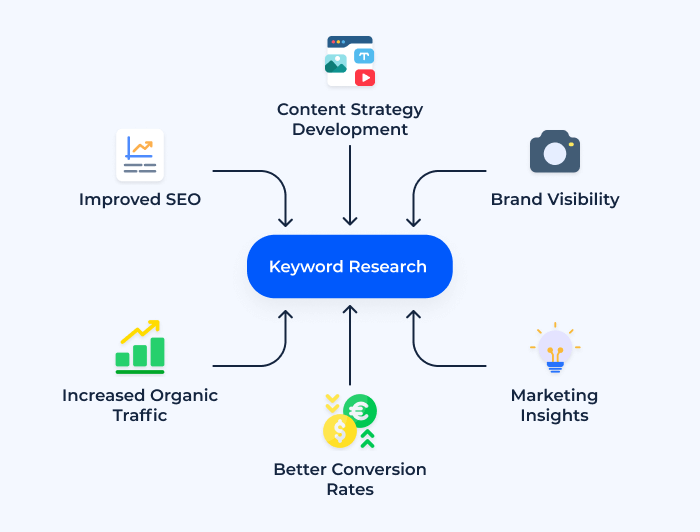
A brand-new domain does not automatically lose to a website that has been online for 10 or 20 years.
I have seen this mistake repeatedly when working through SEO problems: a new site owner looks at the search results, sees established companies with thousands of backlinks, and assumes there is no realistic way to compete. They then target broad, high-volume keywords, publish dozens of articles, and wonder why almost nothing moves.
The problem usually isn’t the age of the domain. It’s the keyword strategy.
A new website can sometimes outrank a much older company when its page is a better match for a specific search intent.
For example, a generic design platform may rank strongly for a broad query such as “logo maker.” A new website is unlikely to beat an established brand there. But a much more specific query such as “AI logo maker for Shopify stores” creates a different competitive environment.
That’s the opportunity.
Google and AI-powered search increasingly need to understand which pages are genuinely useful for a particular query. Domain reputation still matters, but it isn’t an immovable wall.
Here’s a practical five-step roadmap for giving a new domain a realistic chance of competing.
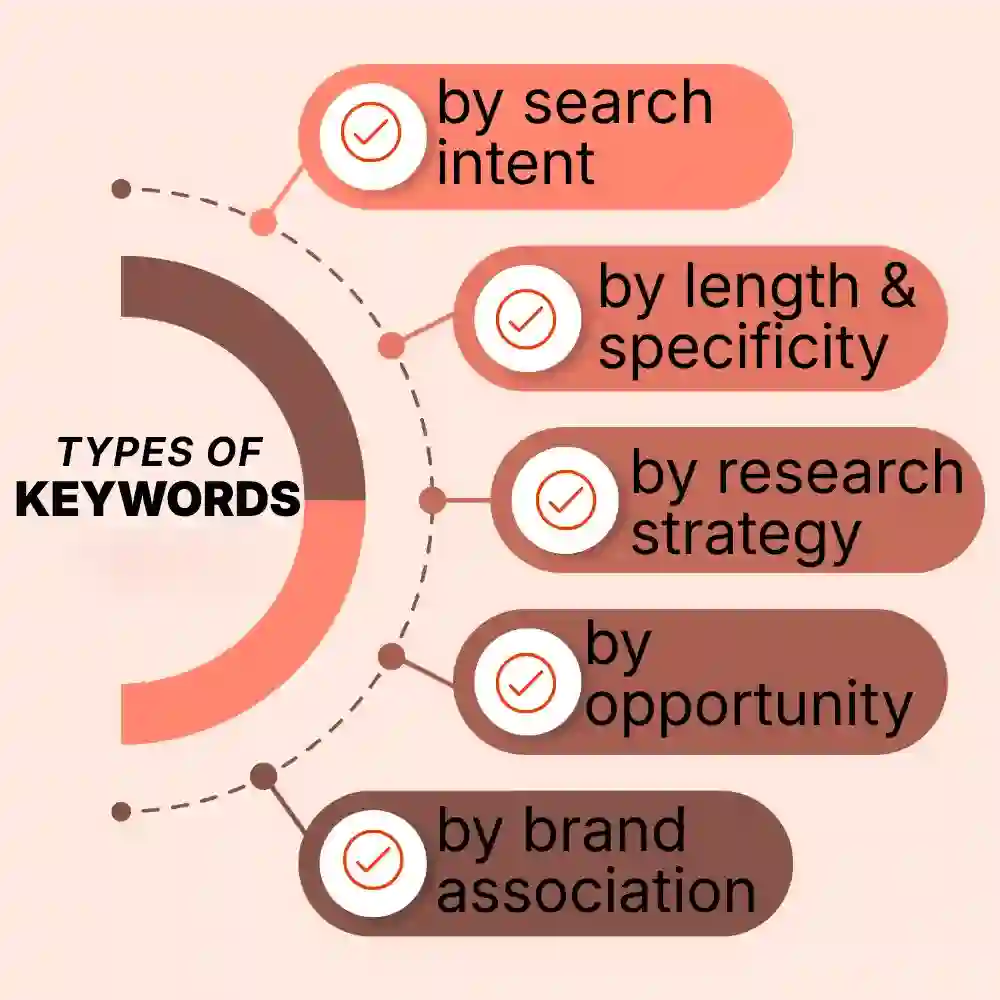
Step 1: Pick Keywords You Can Actually Win
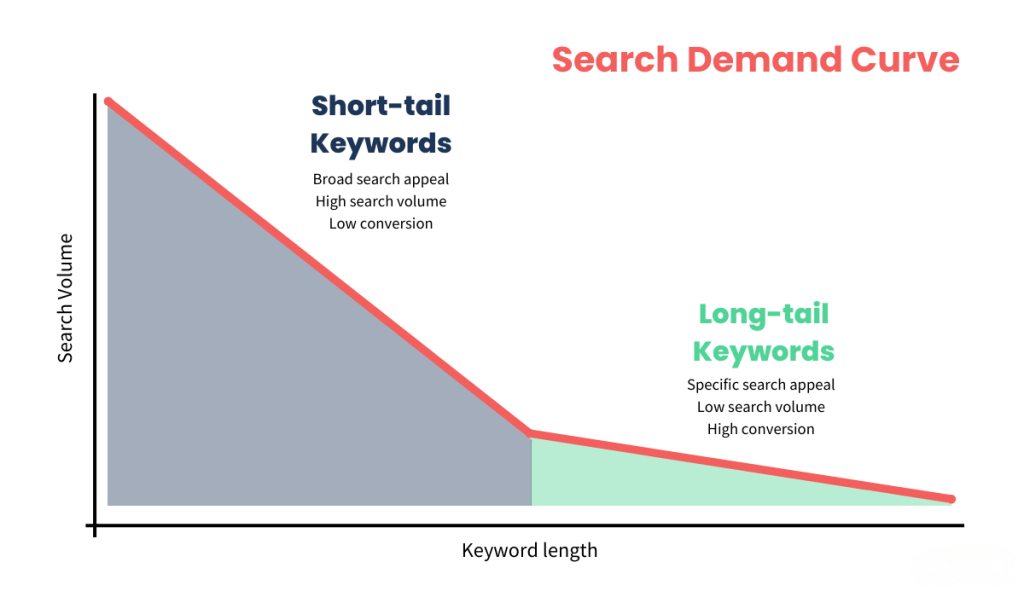
Most SEO advice starts with:
Find keywords with high search volume.
That’s incomplete.
High-volume keywords are usually attractive precisely because everyone else wants them too.
Instead, start with your ideal customer.
Don’t target something vague like:
“marketers”
Define the person more precisely:
- Their job
- Their experience level
- Their budget
- Their industry
- The problem they’re trying to solve
- What they search immediately before buying
If you sell a Shopify website builder, for example, a commercial keyword such as:
Shopify website buildermay be appropriate for your main landing page.
But a new site shouldn’t automatically assume that every broad Shopify-related keyword is worth pursuing.
Find the Search Before the Purchase
Ask yourself:
“What would someone search immediately before they need the product I sell?”
That question often produces better keywords than simply sorting a keyword tool by search volume.
For a new domain, look for the intersection of:
Relevant search + clear intent + realistic competition
You don’t need thousands of visitors if the visitors are highly qualified.
Step 2: Match the Page Format to Search Intent
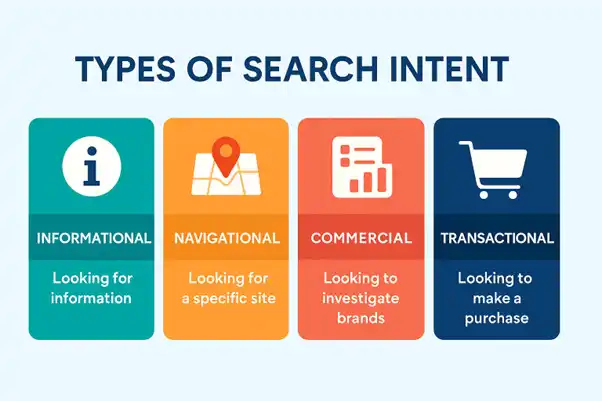
Once you have a keyword, don’t immediately start writing.
Search for it on Google first.
Look at the pages that actually rank.
If almost every result is a product or landing page, Google is probably interpreting the query as commercial or transactional.
Build a landing page.
If the results are mostly comparison articles and tutorials, build a useful article instead.
For example:
“Shopify website builder”
If the results are dominated by product pages, creating a 2,000-word blog post may be the wrong approach.
“Best Shopify page builders”
If the results are predominantly comparison articles, a detailed blog post makes much more sense.
Before creating the page, check:
- Are the results landing pages?
- Are they blog posts?
- Are they comparison pages?
- Are they free tools?
- Are the top results dominated by extremely authoritative domains?
This simple check can save months of wasted content production.
Don’t Trust Keyword Difficulty Blindly
SEO tools can be useful, but their difficulty scores are not absolute truth.
You might find a keyword reported as having low difficulty, while the first page contains extremely authoritative websites.
That’s a warning.
Don’t ask only:
“Does the tool say this keyword is easy?”
Ask:
“Can a new website realistically produce a better result than the pages currently ranking?”
If the answer is no, find a narrower version of the topic.
Step 3: Build Something More Useful Than Another Blog Post
One of the strongest opportunities for a new site is a free tool.
Suppose your company sells a Shopify website builder.
You could publish another article called:
Best Shopify Page Builders
Or you could build a small free tool related to your customer’s actual problem.
For example:
AI Logo Maker for Shopify Stores
The second approach can be powerful because the visitor isn’t merely reading about the problem.
They’re actively solving it.
Why Free Tools Can Work
A useful free tool can generate:
- Search traffic
- Repeat visitors
- Backlinks
- Brand awareness
- Product discovery
- Potential leads
Someone might use the tool today, bookmark it, and return later.
More importantly, they may eventually discover your paid product.
That creates a natural path:
Google Search
     ↓
Free Tool
     ↓
User Gets Value
     ↓
Trust
     ↓
Paid Product
Don’t build a generic tool just because the keyword has enormous search volume.
“Logo maker” is an extremely broad target.
A narrower tool aimed at a specific audience can provide a more realistic entry point.
Step 4: Optimize the Page Without Keyword Stuffing
Getting the right keyword and page format is only half the job.
Your target topic should be clearly represented throughout the page.
For an important landing page, review:
H1
The main heading should clearly communicate what the page is about.
URL
Keep the URL short and descriptive.
For example:
example.com/shopify-website-builder/Subheadings
Use relevant variations where they naturally describe the sections.
Don’t force the exact keyword into every heading.
Images
Write descriptive ALT text that explains what the image contains.
Don’t turn ALT text into a list of keywords.
Calls to Action
Your CTA should clearly connect the page to the visitor’s goal.
For example:
Build Your Shopify Store
is more useful than repeatedly inserting the target keyword into buttons.
The Rule
If the page sounds like a human wrote it for humans, you’re probably on the right track.
If you can clearly see that the same keyword has been inserted 15 times just to satisfy an SEO checklist, you’ve gone too far.
SEO optimization should improve clarity, not make the page awkward.
Step 5: Build Backlinks and Authority
Good content can get a page onto page one.
For competitive searches, backlinks and overall site authority can help determine whether that page moves from position 8 to the top positions.
This is especially important for newer websites competing against established brands.
But don’t chase random links.
What Makes a Useful Backlink?
Look for websites that:
- Have genuine traffic
- Are relevant to your industry
- Have stronger authority than your site
- Publish content related to your topic
- Have a real audience
For example, a healthcare SaaS company would benefit more from a relevant healthcare publication or industry website than from a random directory that exists only to sell links.
Start With Guest Contributions
If you don’t have a large link-building budget, one practical approach is to identify relevant publications and offer genuinely useful guest content.
The process looks like this:
Find relevant website
        ↓
Study its existing content
        ↓
Suggest a useful topic
        ↓
Write genuinely valuable content
        ↓
Earn a relevant editorial link
        ↓
Build authority over time
The important word is relevant.
Don’t create hundreds of low-quality links simply because a service promises fast results.
One useful link from a respected industry publication can be more valuable than dozens of irrelevant links.
Why Most New SEO Strategies Fail
The biggest SEO problem usually isn’t choosing the wrong plugin or missing one technical setting.
It’s stopping too early.
SEO results rarely arrive in a perfectly straight line.
A useful progression to monitor is:
- Target keywords begin moving
- Search impressions increase
- Non-branded clicks increase
- Leads and conversions increase
- Organic revenue grows
Google Search Console is particularly useful for watching impressions and search queries.
Don’t panic if clicks are flat during the early stages.
If impressions are increasing and your target queries are gradually improving, that can be an encouraging early signal.
How to Measure Whether Your Strategy Is Working
Don’t judge a new SEO campaign solely by traffic during the first few weeks.
Instead, monitor three areas.
Google Search Console
Use:
Google Search Console > Performance > Search results
Watch:
- Impressions
- Clicks
- Average position
- Queries
- Pages
Pay particular attention to non-branded searches.
If people already know your company and search its name, those clicks don’t tell you much about whether your SEO strategy is attracting new audiences.
Keyword Rankings
Track the specific keywords you deliberately selected.
A move from position 60 to 25 may not generate much traffic yet, but it tells you the page is beginning to establish relevance.
Conversions
Ultimately, traffic isn’t the objective.
Revenue, leads, signups, downloads, or whatever your business actually needs are what matter.
A keyword generating 100 highly relevant visitors can be more valuable than one producing 5,000 visitors who never become customers.
Common Mistakes and Troubleshooting
Mistake 1: Targeting Huge Keywords Too Early
Don’t start with the most competitive keyword in your industry just because it has thousands of searches.
Start with a keyword you have a realistic chance of winning.
Mistake 2: Ignoring Search Intent
If Google ranks product pages and you publish an informational article, your content may never match what the search engine believes users want.
Check the current results before creating the page.
Mistake 3: Trusting SEO Tools Too Much
Keyword difficulty is an estimate, not a guarantee.
Always manually inspect the search results.
Mistake 4: Building Links From Irrelevant Websites
More backlinks isn’t automatically better.
Prioritize relevance, editorial quality, and genuine websites.
Mistake 5: Quitting After Two Months
This is probably the most expensive mistake.
A new domain needs time to build content, links, relevance, and trust.
Think in terms of six to twelve months, not six to twelve weeks.
The Real Advantage of a New Domain
A new website doesn’t need to beat Canva for “logo maker” on day one.
It needs to find one search query where it can genuinely provide a better answer.
Then another.
And another.
The strategy is:
Find a realistic keyword
        ↓
Match search intent
        ↓
Create the best page or tool
        ↓
Optimize it naturally
        ↓
Build relevant backlinks
        ↓
Measure impressions and rankings
        ↓
Improve and repeat
That’s how a new domain can gradually move from invisible to competitive.
The goal isn’t to publish the most content or chase every high-volume keyword.
It’s to make better strategic bets than your competitors.
And when most competitors give up after a few months, consistency itself becomes a competitive advantage.
Note: Search rankings are never guaranteed. Google and other search systems continuously change their algorithms, and AI search results can vary by query, user, location, and available sources. Treat SEO as a long-term process rather than a guaranteed path to position #1.